
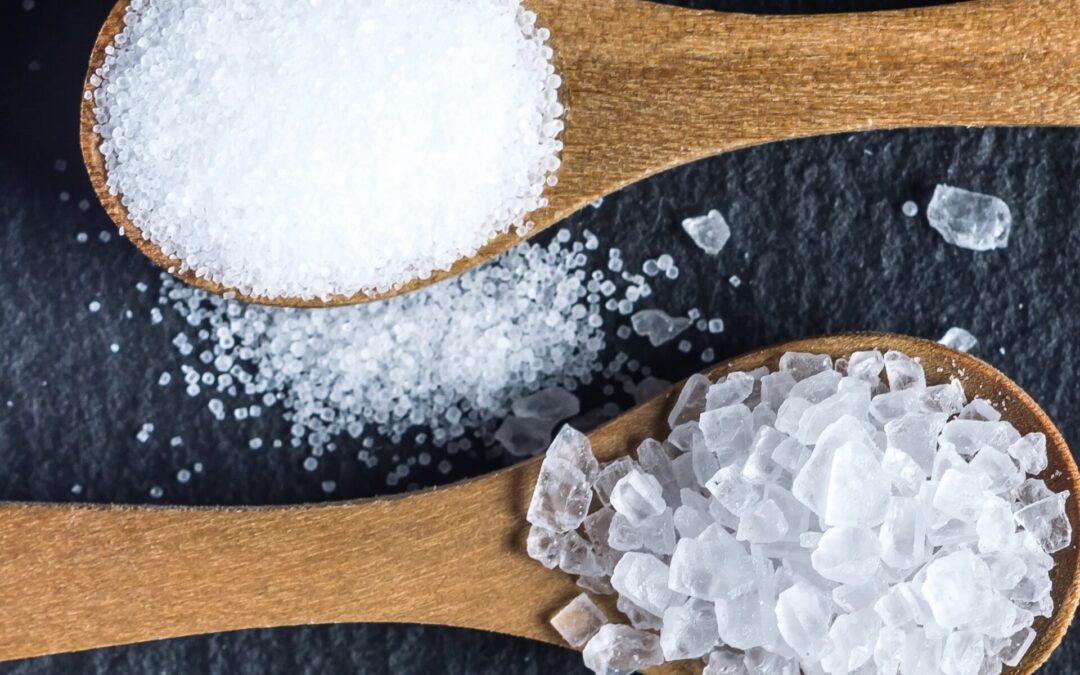
Salt is probably the oldest seasoning there is. Even the Bible talks about this mineral, “if the salt loses its saltiness, how can it be made salty again? It is no good for anything except to be thrown out….” (Matt. 5:13) Salt clearly has a function and is meant to taste salty. But there are many more functions than this. E.g. Salt is a well known preservative, think the salted fish in Cantonese cooking, the Portuguese Bacalhau salted cod, the Italian anchovies or capers packed in coarse sea salt, and when salt is made into a brine to preserve ham and also to make dry cured meats.
Salt is also abrasive and a natural agent for cleaning. You may know through my blogs or my classes that I love using cast iron skillets for cooking. It is great for searing meats and poultry, perfect for cooking steaks, as well as cooking seafood. I love cooking scallops and prawns in mine. Not so much with fish though in my opinion, for this I still go for my non stick frying pan. I have found it is common that a natural residue is left on the cast iron pan and particularly a smell after cooking seafood. Did you know an easy and environmentally friendly way to remove the smell and to clean it is to use a mixture of salt and an uncooked potato? It is really quite simple but requires some elbow grease. First you pour the coarse salt into the cold pan, then cut the potato in half, use the flat side to rub and work the coarse salt on the pan surface, in a scrubbing motion. After that throw out the contents and rinse the pan, then re-season it by rubbing some cooking oil (neutral and low smoking point, like vegetable oil), in the pan evenly. Do this by smearing the oil using a piece of kitchen paper, then put the pan in a preheated oven at about 180c for an hour to bake the oil in and to dry the pan thoroughly. Remember cast iron and water don’t mix well, if the iron is not dried thoroughly, it will rust. When the time’s up, you simply wipe off the excess oil and let the pan cool completely before putting it away.
Salt is imperative in breadmaking and even sweet baking (which I have written about in the “Butter” blog). If there is too little salt added to the bread dough, the texture of the baked loaf is likely to be coarse, but if added too much the bread may not rise as much as it should! Even in cheese making, the salt helps in its form and texture by gelatinising the proteins in the milk. Who knew a bit of salt can make so much magic?
For me, salt gives the best crackling on roast pork, crispy skin on roast chicken as well as a juicy flavoursome steak. I have a few kinds of salts in my kitchen, flakes, crystals, fine flowing, rock, all are used differently. Some I use to season the food during cooking, some pre-season the food before cooking, some add crunch after cooking. I really do think without this seasoning, the food will be bland not because the dish will not have the desired saltiness, but the natural flavours of the ingredients will not be teased out. You will know what I mean when you taste a tomato, eat a slice as it is without any salt, and on the other with some salt flakes crushed on top, you will find that this bite will give you more bang. Growing up, an uncle got me to try a piece of watermelon with salt, the experience was transformational. I guess that’s why in the summer I like to pair watermelon with crumbled feta (salty), pickled red onions, rocket leaves and a drizzle of extra virgin olive oil. Perfect for days when you don’t feel like cooking or eating a meal but want to graze. This is also perfect as part of a barbecue offering or buffet.
I can’t really think of anything bad about salt, except “don’t rub salt in the wound”!
Recent Comments